
Blog
Trade Show Booth Timeline: When Should You Start Planning?
By: Doug Scalise
Trade show planning always raises the same critical question: When should you start working on your booth so you’re not just ready, but positioned to get real results from the show? Between exhibit space, design, show services, shipping, booth staffing and promotions, there’s a lot at stake. Planning ahead determines how effectively you use your budget and how impactful your booth is on the show floor.
Trade Show Executive Magazine cites recent CEIR research, stating exhibitors still invest the largest share of their budgets in exhibit space, followed by staffing, show services, exhibit design, graphics and shipping. These costs are much easier to manage when you’re working with a clear, early timeline.
At Rogers, we’ve managed tradeshow timelines for first-time exhibitors to global brands running multi-show, multi-venue exhibit programs. Based on that experience, we offer the timeline below as a practical benchmark for trade show success.
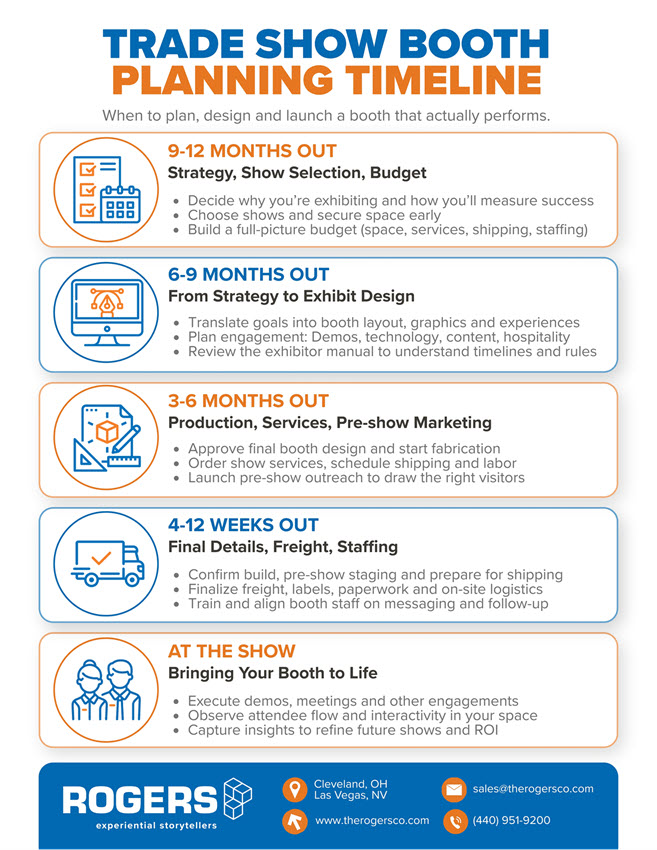
9-12 Months Out: Strategy, Show Selection and Budget
The most effective trade show programs begin to take shape 9-12 months before the event. This is your window to decide why you’re exhibiting, which shows deserve your investment and how much budget you’ll need to achieve your goals.
At this stage, focus on:
- Clarifying objectives and success metrics
Decide what success looks like. Qualified leads? Brand awareness? Revenue? New product launches? Customer meetings? Knowing what you’re trying to achieve beforehand will help guide every step you take in your trade show planning and execution. Identifying your success metrics also means you can evaluate your ROI after the show, rather than relying on “the booth was busy” as your only indicator.
- Choosing your shows and securing space
Use the show-provided attendee profiles, historical performance and competitive presence to prioritize which events truly belong on your calendar. Booth selection for larger events often opens about a year before the event date, so knowing early where you plan to exhibit enables you to secure the best possible location before space tightens or becomes unavailable.
- Building a realistic budget
There’s more to trade show budgeting than floor space and booth displays. Shipping, material handling, utilities, promotions and staffing are all part of a realistic trade show budget. Getting a seasoned exhibit partner involved early can help you see the full picture, identify hidden costs and make smarter decisions about where to invest.
6-9 Months Out: From Strategy to Exhibit Design
Once your strategy, show calendar and budget are set, it’s time to start working on a booth design that supports your goals. This is also when you want to start thinking through the practical details, like services and logistics, that will keep the exhibit running smoothly on site.
At this stage, focus on:
- Translating goals into exhibit design
With your goals established, you’ll have a better idea of what you need in your booth to meet them. From graphics and product demos to interactive technology, meeting spaces, hospitality areas and storage, an exhibit partner can help you turn your objectives into a booth that works for you.
- Planning engagement, content and technology
Think about how you’ll attract and hold attention in the booth. Interactive technology, AV content, QR codes and hospitality can play vital roles in attendee engagement and recall. This is also the time to plan and develop the content for screens and devices, so you’re not scrambling for videos, presentations or app setups right before the show.
- Laying the groundwork for services and logistics
As your design takes shape, review the exhibitor manual to understand the rules, height limits, target move-in/-out dates and service deadlines that impact your booth layout, setup and budget. Bringing your exhibit house into those details early helps you make design choices that work with the show’s requirements, rather than finding out you have issues once you get to the show floor.
3-6 Months Out: Production, Show Services and Pre-Show Marketing
By the time you’re 3–6 months from the show, your trade show plan should be moving from ideas into execution. This is when design turns into a built exhibit, services and freight get locked in and your marketing starts drawing the right people toward your booth.
At this stage, focus on:
- Approving the final design and starting fabrication
Once your layout, structures and graphics are finalized, your exhibit house can move into engineering and fabrication. Custom booths and more complex exhibits often need several months for production and finishing, so timely approvals protect you from rush charges, limited options and last-minute compromises.
- Ordering show services and coordinating logistics
With your design set, you can confidently order electrical, compressed air, Wi-Fi, cleaning, furnishings, lead retrieval and other show services for your booth. This is also the time to arrange inbound and outbound shipping, as well as scheduling labor to install and dismantle your booth. Working through these details with your exhibit partner now helps you avoid surprise fees and on‑site challenges later.
- Launching pre-show marketing and outreach
With your presence confirmed, shift some focus to filling the booth with the right visitors. Use email, social media, the show’s marketing tools and personal outreach from sales to promote what’s happening in your booth and invite key customers and prospects. Pre-show outreach helps you get on the attendee’s short list before they arrive, instead of relying solely on aisle traffic once the doors open.
4–12 Weeks Out: Final Details, Freight and Staff Readiness
In the final few weeks before the show, the focus shifts from building and booking to confirming details, getting your exhibit in motion and preparing your team to perform on site.
At this stage, focus on:
- Confirming production and walk-throughs
As the show approaches, confirm that all exhibit components, graphics and accessories are completed and ready to ship. If your exhibit house offers a pre-show staging preview, take advantage of it so you can see key elements assembled, test technology and address any final tweaks before everything is crated and sent to the show.
- Managing shipping and on-site logistics
Make sure your freight is scheduled to arrive at the advance warehouse or show site with enough buffer to account for weather, carrier delays or other disruptions. Double-check labels, Bills of Lading and return instructions; and confirm installation and dismantle dates and crew assignments so your team isn’t troubleshooting trucks and labor at the last minute.
- Preparing and aligning your booth staff
Give your booth team clear talking points, qualifying questions, demo flows and guidelines for capturing notes and next steps. Align on roles for demos, hosted meetings and hospitality, and ensure everyone understands the follow-up process so leads collected in the booth don’t stall once the show is over.
At the Show: Bringing Your Booth to Life
When the show finally opens, all of your planning turns into meaningful brand impressions, impactful demos and real conversations with customers and prospects. This is where the work you’ve done over the past several months starts to pay off.
Now is a great time to see your exhibit the way attendees do. Walk the aisle and notice what grabs attention first, how clearly your main message reads from a distance and how easy it is to tell where to go for demos or conversations. Spend a little time inside the booth watching how people move through the space, where they naturally pause and how often your team has the chance to engage. These observations provide invaluable input for future shows, helping you refine your space and maximize your ROI.
Why Rogers Is a Strong Exhibit Partner
A trade show booth is more than a structure. It’s a concentrated expression of your brand, your story and your sales priorities in a crowded, high-pressure environment. Getting it right means more than having a good idea. It means making the right decisions at the right time, from show selection and budgeting to design, services and execution on site.
Rogers brings decades of trade show experience to that full timeline, helping clients map out their show calendars, define goals, plan realistic budgets and move smoothly from strategy to exhibit design, fabrication and logistics and on‑site support. We design exhibits that perform on the floor and make smart use of your investment, whether you’re planning one event or a full year of shows. When you have a partner who understands the calendar, the creative and the coordination, your trade show booth delivers better visitor experiences and better bottom line results.
Start a conversation about your next exhibit.
"*" indicates required fields